From Spill to Stone: The Chemistry That Makes Oven Grime So Difficult to Remove
At first glance, a dirty oven might seem like a straightforward cleaning challenge — one that can be addressed whenever time permits. The reality, however, is considerably more complex. The residue accumulating on your oven's interior surfaces is not static. It is actively changing at a molecular level with every heat cycle, becoming progressively more difficult to dislodge and, in some cases, nearly impossible to remove without professional-grade equipment and expertise.
Understanding why this happens — and what it means for your appliance — is the first step toward making more informed decisions about kitchen maintenance.
The First Stage: What Happens When Food Meets Heat
Every time food splatters onto the walls, floor, or ceiling of your oven, a chemical process begins almost immediately. Fats, proteins, sugars, and water-based liquids each respond differently to heat, but they share a common trajectory: dehydration followed by carbonization.
In the early stages, water content evaporates rapidly. What remains is a concentrated layer of organic compounds — fats and proteins that have begun to denature and break down. At temperatures above 300°F, which is well within the normal operating range of a standard residential oven, the Maillard reaction and caramelization processes accelerate the transformation of these compounds into darker, more complex molecular structures.
At this stage, the residue is still relatively porous and can be removed with modest effort. Most homeowners, however, do not address spills immediately. That decision, while understandable, initiates the next phase of the process.
Carbonization: When Residue Becomes Residual Carbon
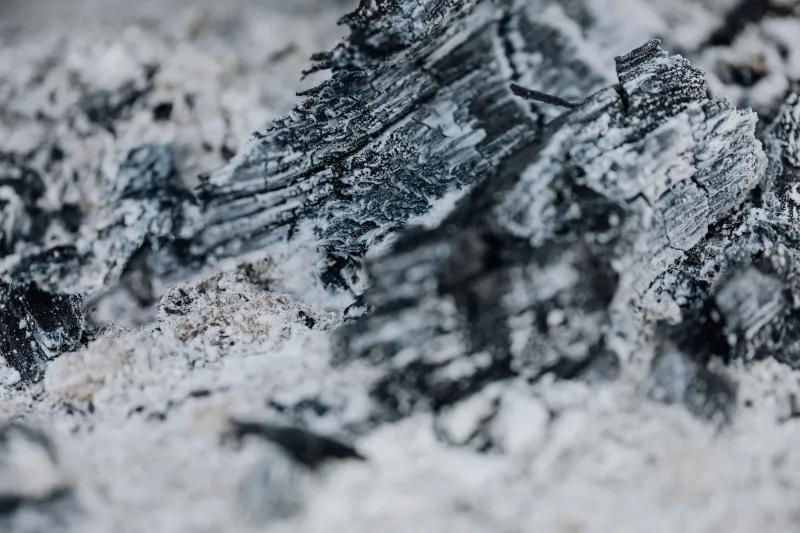
With repeated exposure to heat, organic deposits undergo pyrolysis — a thermal decomposition process that strips away volatile compounds and leaves behind a carbon-rich matrix. This is the black, hard crust that most people associate with a heavily used oven.
Carbon residue is chemically inert and structurally rigid. It bonds to metal surfaces through a combination of mechanical adhesion — filling microscopic surface pores — and, in some cases, low-level chemical bonding with oxidized metal. The longer this layer is subjected to additional heat cycles, the denser and more adherent it becomes.
This is why a spill that might have wiped away with a damp cloth on day one becomes a chiseling project six months later. The material has fundamentally changed. It is no longer food — it is a carbon composite with properties more akin to charcoal than to the original substance that created it.
The Role of Oxidation and Grease Polymerization
Fats introduce an additional layer of complexity. When cooking oils and animal fats are heated repeatedly, they undergo oxidative polymerization — a process in which oxygen molecules bond with fat molecules to form long, cross-linked polymer chains. This is the same basic chemistry that makes linseed oil harden into a durable finish when used on wood.
Inside an oven, polymerized grease forms an extremely tenacious film that resists most water-based and even many solvent-based cleaning agents. Over time, successive layers of polymerized grease accumulate, each cycle adding density and adhesion. Standard commercial oven cleaners can penetrate fresh grease effectively, but they struggle significantly against fully polymerized deposits that have been heat-cured over months or years.
The combination of carbonized food residue and polymerized grease creates a composite material that is, in practical terms, engineered to resist removal.
Mineral Deposits: The Hidden Complicating Factor
Another variable that most homeowners overlook is mineral content. Water used in cooking — whether from boiling vegetables, steam from roasting meats, or moisture in baked goods — evaporates inside the oven cavity and leaves behind dissolved minerals. In much of the United States, tap water contains significant concentrations of calcium, magnesium, and other minerals that form scale deposits when the water evaporates.
These mineral deposits bond with carbon and grease layers, creating a mixed matrix that is simultaneously alkaline-resistant (due to the carbon content) and acid-resistant (due to the mineral composition). Addressing it effectively often requires a staged cleaning approach that alternates between different chemical treatments — a process that goes well beyond what most store-bought products are formulated to handle.
Why Time Works Against You: The Compounding Effect
Perhaps the most important insight from this chemistry is that oven buildup does not accumulate linearly — it compounds. A deposit that has been present for three years is not merely three times harder to remove than a one-year-old deposit. The cross-linking of polymers, the densification of carbon layers, and the integration of mineral salts create a synergistic hardening effect that accelerates over time.
This compounding dynamic has direct economic implications. A professional cleaning performed annually — or even every 18 months — addresses deposits before they reach their most resistant stages. The labor involved is substantially lower, the risk of surface damage during cleaning is reduced, and the likelihood of restoring the appliance to near-original condition is significantly higher.
Conversely, waiting until buildup is severe enough to affect oven performance — uneven heating, persistent odors, or smoke during operation — typically means the cleaning process is far more intensive. In some cases, components such as heating elements, door gaskets, or oven liners may have sustained damage that requires repair or replacement, adding costs that proper maintenance would have avoided entirely.
What Professional Cleaning Actually Addresses
Professional oven cleaning services are designed with this chemistry in mind. Rather than relying on a single cleaning agent applied uniformly, a methodical approach involves assessing the type and severity of deposits, selecting appropriate degreasers and descaling agents, and applying them in a controlled sequence that allows each product to work effectively without damaging the underlying surfaces.
Specialized equipment — including steam systems, professional-grade non-caustic solutions, and precision tools for reaching recessed areas — allows for thorough removal of even heavily carbonized deposits. Equally important, professional technicians understand which surfaces and coatings are sensitive to specific chemicals, preventing the inadvertent damage that can result from aggressive DIY attempts.
At Oven Refresh, this understanding of appliance chemistry informs every service call. The goal is not simply to make an oven look clean — it is to reverse the accumulation of compounds that degrade performance, affect food quality, and shorten appliance lifespan.
The Case for Preventative Maintenance
The science is clear: the earlier buildup is addressed, the easier and less costly the process. Homeowners who schedule regular professional cleanings benefit from appliances that operate more efficiently, produce less smoke and odor, and maintain consistent cooking temperatures — all of which contribute to better results in the kitchen.
More broadly, understanding that oven grime is a chemical phenomenon rather than a simple hygiene issue reframes the conversation around maintenance. It is not a matter of how clean you keep your kitchen in general — it is a matter of recognizing that the interior of your oven is an environment where chemistry is constantly at work, and where timely intervention makes a measurable difference.
If your oven has not received a professional cleaning within the past year, the compounds described in this article are almost certainly present and actively hardening. The most cost-effective moment to address them is now — before the next heat cycle makes the task more difficult than it needs to be.