5 Kitchen Appliances You're Probably Neglecting — And Why a Professional Touch Makes All the Difference
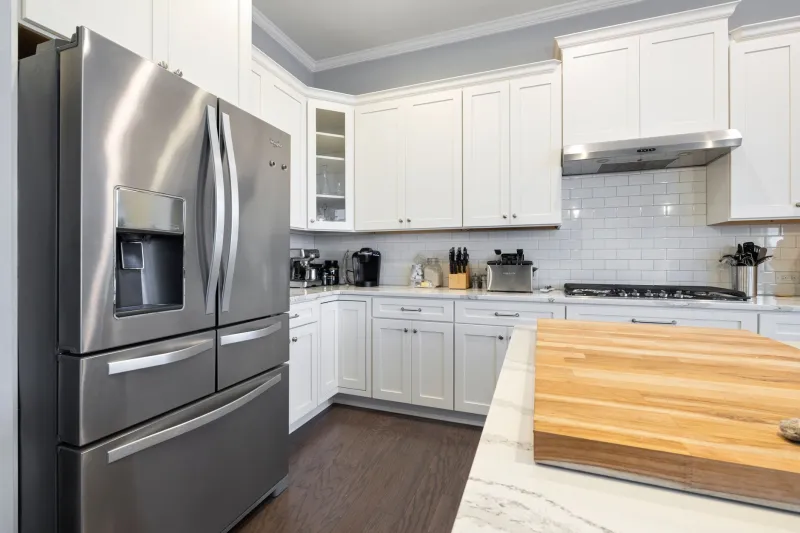
When most people think about professional appliance cleaning, the oven naturally comes to mind first. It's the workhorse of the kitchen, the appliance most visibly subject to spills, smoke, and buildup. But a well-functioning kitchen is a system, and every component within that system has maintenance requirements that, when ignored, compound into costly inefficiencies and premature replacements.
The following five appliances are among the most neglected in American kitchens — and among the most rewarding to restore through professional service. Each one presents a case study in how specialized cleaning extends lifespan, improves performance, and protects your investment far more effectively than periodic DIY attempts.
1. The Stovetop: More Than Surface-Level Grime
The stovetop is perhaps the most frequently used cooking surface in any kitchen, and the one most likely to be cleaned only superficially. A quick wipe between cooking sessions addresses the visible mess, but it rarely reaches the grease that migrates beneath burner grates, into the channels around sealed burners, or under the cooktop surface itself on slide-in range models.
On gas stovetops, clogged burner ports are a common consequence of accumulated food debris and grease. When these ports are partially blocked, the flame pattern becomes uneven — a condition that most homeowners attribute to a faulty appliance rather than a maintenance issue. Uneven flames mean uneven cooking temperatures, wasted gas, and in some cases, a higher risk of incomplete combustion. Professional technicians disassemble burner assemblies, clear ports with precision tools, and clean the internal channels that a sponge and dish soap simply cannot access.
For glass-ceramic induction or electric stovetops, the concern is different but equally significant. Burned-on residue from boilovers etches into the surface over time when left unaddressed or scrubbed with abrasive materials. Professional restoration uses appropriate chemical agents and non-abrasive techniques that lift these deposits without scratching or clouding the cooktop surface — preserving both appearance and the integrity of the glass.
The result of a professionally restored stovetop is not just cosmetic. Burner efficiency improves, cleaning between uses becomes substantially easier, and the appliance operates as designed rather than compensating for accumulated obstruction.
2. The Range Hood: The Kitchen's Forgotten Filtration System
The range hood is, functionally, the exhaust system of your kitchen. It captures grease-laden vapor, combustion byproducts, steam, and odors before they can circulate through the rest of your home. Yet it is one of the most consistently neglected appliances in residential kitchens — and one of the most critical to maintain.
Range hood filters — whether mesh, baffle, or charcoal — have a finite capacity for grease absorption. Once saturated, they cease to function effectively, meaning that the airborne grease and particulate matter they were designed to capture instead coats the interior of the hood housing, the fan blades, and the ductwork. This accumulated grease is not merely an efficiency problem; it represents a genuine fire hazard. Grease-saturated ductwork is one of the leading causes of kitchen fires in American homes.
Professional range hood restoration involves degreasing the exterior housing, disassembling the interior to clean fan blades and motor housings, servicing or replacing filters, and in some cases cleaning accessible ductwork sections. The difference in suction power following a professional service is immediately measurable — and the fire risk reduction is a benefit that cannot be overstated.
For homeowners who cook frequently, range hood filter cleaning or replacement every one to three months is advisable, with a full professional interior service annually.
3. The Microwave: A Surprisingly Complex Cleaning Challenge
The microwave occupies a unique position among kitchen appliances: it is used daily by most households, cleaned casually and infrequently, and rarely considered a candidate for professional service. This perception underestimates both the complexity of a thorough microwave cleaning and the consequences of neglect.
Food particles that splatter inside a microwave and are not promptly removed continue to absorb microwave energy with each subsequent use. This repeated heating causes them to carbonize, producing odors, and in some cases, creating localized arcing — small electrical discharges that can damage the interior coating and, over time, the magnetron itself. A compromised interior coating is not merely a cosmetic issue; it can affect the appliance's ability to reflect microwave energy safely and efficiently.
The areas that require professional attention in a microwave extend beyond the visible cavity. The waveguide cover — a small panel, usually made of mica, that protects the magnetron from food splatter — is a frequent casualty of neglect. When this cover becomes saturated with carbonized food, it can arc and crack, requiring replacement. The door seal, the ventilation grilles, and the turntable assembly also accumulate grease and debris that impede function.
Professional microwave restoration addresses all of these components systematically, using food-safe degreasers and non-abrasive techniques appropriate to the interior surfaces. The outcome is an appliance that operates efficiently, smells clean, and poses none of the electrical risks associated with a heavily carbonized interior.
4. The Dishwasher: Clean Dishes, Dirty Machine
There is an irony in the fact that the dishwasher — an appliance dedicated entirely to cleaning — is itself so frequently left uncleaned. Most homeowners assume that the hot water and detergent passing through the machine during each cycle are sufficient to keep it self-maintained. In practice, the opposite is true.
Dishwasher interiors accumulate food debris in the filter assembly, grease and soap scum on the spray arms and interior walls, mineral deposits from hard water on heating elements and door seals, and mold in the rubber gasket around the door. Clogged spray arm ports reduce water distribution, resulting in dishes that emerge with food residue despite a full wash cycle. A saturated or clogged filter allows food particles to recirculate onto dishes during the wash.
Many homeowners in hard-water areas of the US — the Southwest, the Mountain West, and parts of the Midwest — contend with particularly aggressive mineral buildup that, if unaddressed, permanently damages the heating element and reduces the machine's ability to reach sanitizing temperatures.
Professional dishwasher service involves disassembling and thoroughly cleaning the filter system, clearing spray arm ports, descaling the heating element and interior surfaces, treating the door gasket for mold, and inspecting the drain hose for blockages. The improvement in wash performance following professional service is often dramatic — and the extension of appliance lifespan represents a meaningful return on the cost of service.
5. Refrigerator Condenser Coils: The Hidden Efficiency Drain
Of the five appliances on this list, refrigerator condenser coils are perhaps the least visible and the most consequential when neglected. Located either at the back of the unit or beneath it behind a grille, the condenser coils are responsible for releasing the heat extracted from the refrigerator's interior into the surrounding air. When these coils are coated in dust, pet hair, and debris — as they invariably become over time — their ability to dissipate heat is significantly impaired.
The consequence of impaired heat dissipation is that the compressor must work harder and run longer to maintain the set temperature. This translates directly into higher electricity consumption, elevated wear on the compressor, and a measurably shorter appliance lifespan. The US Department of Energy estimates that dirty condenser coils can increase refrigerator energy consumption by as much as 30 percent — a meaningful addition to household utility costs over the course of a year.
Professional coil cleaning uses specialized vacuum attachments and coil brushes to remove accumulated debris thoroughly without damaging the delicate coil fins. For households with pets, coil cleaning every six months is advisable. For others, an annual cleaning is a reasonable standard.
The Case for a Whole-Kitchen Approach
Each of these appliances functions as part of an interconnected kitchen system. When any component underperforms due to neglect, the burden shifts to adjacent appliances, energy costs rise, and the risk of premature failure increases across the board. A professional whole-kitchen restoration — addressing the oven, stovetop, range hood, microwave, dishwasher, and refrigerator in a single service — resets the entire system to optimal function.
At Oven Refresh, we approach kitchen appliance restoration as a comprehensive discipline, not a single-appliance transaction. Our technicians bring the same standard of thoroughness to every appliance they service — because a truly refreshed kitchen is one where every component is performing at its best.