The New Standard of Clean: How Commercial Kitchens Are Rethinking Appliance Maintenance
There was a time — not so long ago — when professional oven cleaning in a commercial kitchen was scheduled reactively: when an inspector flagged a violation, when a malfunction forced a closer look, or when grease buildup became severe enough to constitute a visible embarrassment. For many restaurant operators, it was a line item they managed with reluctance and deferred as long as possible.
That calculus has changed decisively. Across the United States, restaurant owners, executive chefs, and food service managers are approaching professional appliance maintenance with a seriousness and regularity that would have seemed excessive a decade ago. The reasons are multiple, interconnected, and — for those who have absorbed the lessons of recent years — entirely rational.
The Regulatory Environment Has Sharpened Considerably
Health department inspections have always been a fact of life for commercial food service operations. But the criteria applied during those inspections, and the consequences of falling short, have grown substantially more rigorous in the years following the COVID-19 pandemic.
Public health agencies at the city, county, and state levels revisited their inspection frameworks between 2020 and 2023, many of them expanding the scope of what inspectors evaluate during routine visits. Oven interiors, ventilation systems, and cooking equipment surfaces — areas that were sometimes reviewed cursorily in prior inspection cycles — are now subject to more detailed scrutiny in jurisdictions across the country.
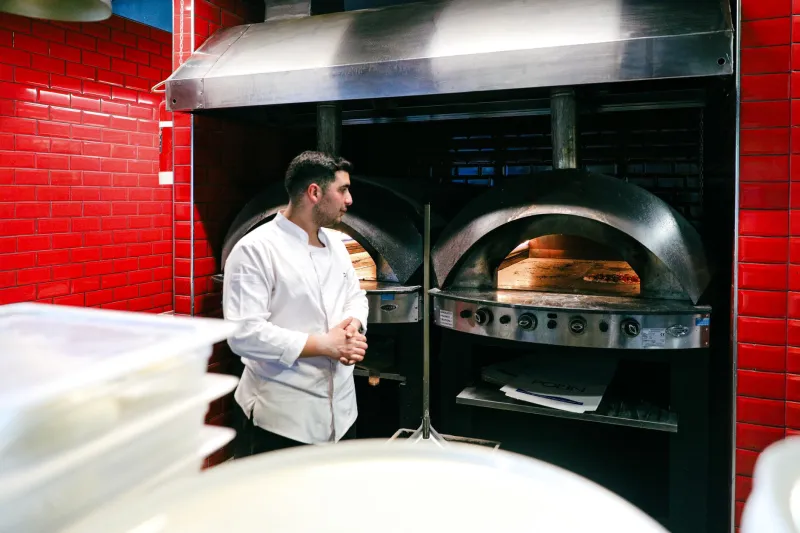
"We're seeing inspectors get into the equipment in ways they weren't before," said the owner of a mid-sized Italian restaurant in Chicago who requested that her establishment not be identified by name. "The first time an inspector opened my deck oven and made a notation about grease accumulation, I took it seriously. We brought in a professional cleaning service the following week, and we've stayed on a quarterly schedule ever since. The next inspection was a completely different experience."
This sentiment is echoed by operators in markets ranging from New York City — where the Department of Health's letter-grade system creates acute public accountability for inspection outcomes — to smaller metro areas where a single failed inspection can carry disproportionate reputational weight in a tight-knit dining community.
The Economics of Prevention vs. Replacement
Beyond regulatory compliance, the financial argument for professional appliance maintenance has become increasingly difficult to dismiss. Commercial cooking equipment represents a substantial capital investment. A commercial convection oven may cost anywhere from $3,000 to over $15,000 depending on configuration. A commercial range with multiple burners and an integrated oven can exceed $20,000. When these assets are not maintained properly, their operational lifespan contracts — and the cost of replacement falls entirely on the operator.
The mechanism is straightforward. Grease accumulation in oven cavities and ventilation components forces heating elements, burners, and fans to work against additional thermal resistance and airflow restriction. Motors run hotter and longer. Heating elements cycle more frequently. Components that might otherwise serve a decade of reliable use begin to fail within five or six years.
"We had a combi oven go down in the middle of a Saturday dinner service two years ago," recounted the executive chef of a hotel restaurant in Atlanta. "The repair technician told us the fan motor had burned out — and when he opened the unit, it was obvious why. There was grease coating every surface inside that housing. We spent close to $2,000 on the repair and lost significant revenue that evening. I did the math. Regular professional cleaning costs a fraction of what that one incident cost us."
That arithmetic — preventive maintenance cost versus reactive repair and replacement cost — is driving an industry-wide reassessment. When professional oven cleaning is framed not as a cleaning expense but as equipment protection, the return on investment becomes clear.
Post-Pandemic Hygiene Standards and Diner Expectations
The pandemic reshaped consumer expectations around cleanliness in ways that persist well beyond the acute public health crisis. Diners who became acutely aware of surface contamination, air quality, and hygiene protocols during 2020 and 2021 have not entirely relinquished those heightened sensitivities. Restaurant operators who understand their customer base recognize that kitchen hygiene — even the portions of the kitchen that diners never see — is now part of the implicit contract with their guests.
Open kitchen designs, which became fashionable in American fine dining and casual restaurants alike throughout the 2010s, have made this dynamic even more pronounced. When diners can observe kitchen operations directly, the cleanliness of cooking equipment becomes part of the dining experience itself. Operators with open kitchens report that visible equipment cleanliness has become a point of pride — and a competitive differentiator.
"Our kitchen is completely open to the dining room," said the co-owner of a fast-casual grain bowl concept in Austin, Texas. "Our guests can see everything. We have our ovens professionally cleaned every eight weeks without exception. It's not just about compliance — it's about what we're communicating to the people eating our food. They're paying attention, and they should be."
Health inspectors confirm this shift in operator mindset. A senior environmental health specialist with a large county health department in Southern California — speaking in a general capacity rather than on behalf of the department — noted that the proportion of commercial kitchen operators voluntarily disclosing their professional cleaning schedules during inspections has increased noticeably in recent years. "Operators are coming in prepared to show documentation of their maintenance practices," the specialist observed. "That wasn't common five years ago. It speaks to a broader cultural shift in how the industry thinks about this."
Operational Benefits Beyond Compliance
The conversation around professional oven cleaning in commercial settings increasingly extends beyond compliance and equipment longevity into the realm of operational performance. A clean oven is a more accurate oven. Carbonized grease on oven walls and floors alters the thermal dynamics of the cooking environment, causing hot spots and uneven heat distribution that affect cooking consistency. For establishments where recipe precision is a competitive advantage, this is not a trivial concern.
Energy efficiency is another measurable benefit. Commercial ovens that are maintained in clean condition operate more efficiently — reaching target temperatures more quickly and maintaining them with less energy expenditure. In a commercial kitchen running multiple ovens for eight to twelve hours daily, the cumulative energy savings from clean, well-maintained equipment are financially significant.
Staff morale and kitchen culture are less quantifiable but equally real factors. Professional kitchen teams take pride in their working environment. A kitchen that is visibly well-maintained signals to employees that management is invested in the quality of their workspace — and that investment tends to be reciprocated in the care employees extend to the equipment.
A Necessity, Not a Luxury
The framing that once positioned professional oven cleaning as a premium service — something larger, more sophisticated operations indulged in while smaller operators made do — has become increasingly untenable. The regulatory environment does not distinguish between fine dining and fast casual when it comes to cleanliness standards. The physics of grease buildup and equipment wear do not exempt smaller kitchens. And the economics of equipment replacement are, if anything, more painful for independent operators than for large chains.
At Oven Refresh, we work with commercial clients across the full spectrum of the food service industry — from independent neighborhood restaurants to hotel kitchens and institutional cafeterias. What we observe consistently is that the operators who treat professional appliance maintenance as a non-negotiable operational standard are better positioned across every dimension: regulatory compliance, equipment longevity, energy efficiency, and the confidence that comes from knowing their kitchen is performing at its best.
The new standard of clean in commercial kitchens is not a trend. It is a permanent recalibration — and the operators who have embraced it are not looking back.