Stop Replacing, Start Restoring: The Smart Economics of Kitchen Appliance Longevity
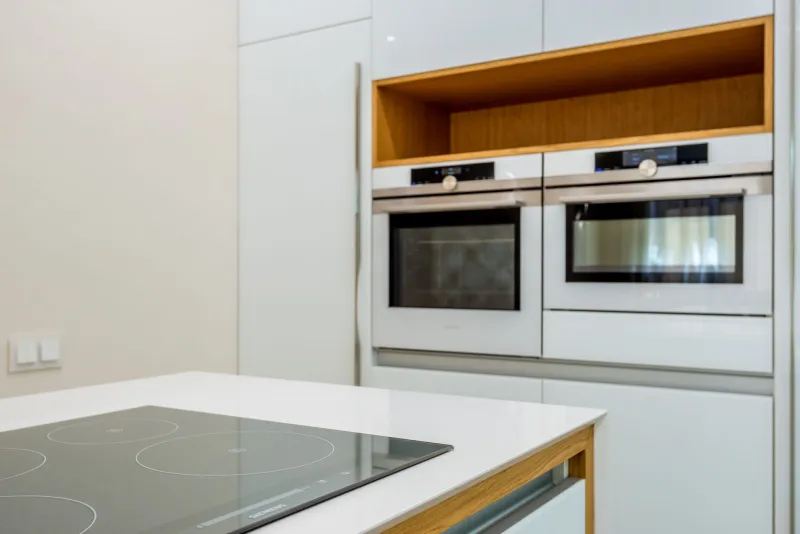
There is a familiar moment in many American kitchens: the oven starts smoking, the range burners heat unevenly, or the interior of the microwave begins to smell faintly of every meal cooked in the past three years. The instinct, for many households, is to start browsing appliance retailers. But that instinct — understandable as it is — often leads to an unnecessary expense.
Professional appliance restoration is not a niche service for antique collectors or budget-strapped renters. It is a financially sound, environmentally responsible approach that is gaining traction among homeowners, property managers, and commercial kitchen operators alike. The economics, when examined carefully, are difficult to argue with.
The True Cost of "Just Buying a New One"
A mid-range freestanding gas range in the United States currently retails between $800 and $1,500. A built-in double wall oven can easily run $2,000 to $4,500, depending on brand and features. Add installation labor — typically $150 to $300 for standard swaps, and considerably more for built-ins — and the total outlay climbs quickly.
Beyond the sticker price, there are hidden costs that rarely appear in the purchase decision. Disposal fees for old appliances can range from $25 to $100 or more depending on municipality. Delivery windows mean time off work. New appliances require a break-in period, and modern units, while technologically sophisticated, do not always outperform a well-maintained older model in terms of raw cooking performance.
Contrast this with the cost of professional deep cleaning and restoration. A comprehensive oven cleaning service — one that addresses baked-on carbon deposits, grease accumulation in burner assemblies, degraded door seals, and interior surface restoration — typically falls between $150 and $350 for residential units. For that investment, an appliance that appeared to be at the end of its useful life is often returned to near-original operating condition.
What Neglect Actually Does to an Appliance
The degradation of kitchen appliances is rarely dramatic. It is gradual, cumulative, and easy to rationalize at each small stage. A thin layer of grease becomes a thick one. Carbon deposits on oven walls begin to affect heat distribution. Burner ports clog incrementally, reducing flame efficiency. Door gaskets harden and crack, allowing heat to escape and forcing the appliance to work harder to maintain temperature.
Each of these issues, left unaddressed, compounds the others. An oven that runs 25 to 50 degrees cooler than its set temperature due to heat loss is not just inconvenient — it is consuming more energy to achieve inferior results. Over months and years, that inefficiency translates directly into higher utility bills.
Perhaps more significantly, neglected appliances are frequently misdiagnosed as broken when they are simply dirty. A technician called in to assess a malfunctioning oven will often find that the root cause is not mechanical failure but rather accumulated debris interfering with sensors, igniters, or airflow. In these cases, a professional cleaning resolves the issue entirely — no parts, no replacement, no disruption.
Real-World Scenarios: The Math in Practice
Consider a residential scenario common to many households. A family has owned a double oven range for eight years. The lower oven has started producing uneven baking results and a persistent burning odor. The assumption is that the appliance is aging out. A professional assessment, however, reveals heavily carbonized walls affecting heat reflection and a partially blocked convection fan due to grease buildup. A full restoration service addresses both issues. Total cost: approximately $275. The appliance continues performing reliably for another four to six years — representing thousands of dollars in deferred replacement cost.
In a commercial context, the numbers scale accordingly. A restaurant-grade range or convection oven represents an investment of $3,000 to $15,000 or more. Scheduled professional cleaning and maintenance — typically performed quarterly in high-volume kitchens — extends equipment life significantly while also satisfying health department inspection requirements. Operators who treat cleaning as a maintenance investment rather than a reactive expense consistently report lower total cost of ownership over the lifespan of their equipment.
The Environmental Dimension
The financial case for restoration is compelling on its own. But there is an additional dimension that resonates with a growing segment of American consumers: the environmental cost of appliance disposal.
The Environmental Protection Agency estimates that large appliances account for millions of tons of municipal solid waste annually in the United States. While many components are recyclable in principle, the practical reality is that a significant portion of discarded appliances end up in landfills. Manufacturing a replacement appliance carries its own environmental footprint — raw material extraction, energy-intensive production, and long-distance shipping all contribute to a carbon cost that is rarely factored into the purchase decision.
Choosing restoration over replacement is, in this sense, a form of environmental stewardship. It keeps functional materials in service, reduces manufacturing demand, and avoids the disposal burden. For households and businesses seeking to align their spending with their values, it is an argument that goes beyond dollars and cents.
Recognizing the Signs Before It's Too Late
One of the most common missed opportunities in appliance care is waiting until a problem becomes acute. By the time an oven is smoking visibly or a burner refuses to ignite, the cost of correction is higher than it would have been with earlier intervention. The threshold for professional cleaning should not be malfunction — it should be a regular schedule.
For residential ovens used with moderate frequency, an annual professional cleaning is a reasonable baseline. Households with heavy cooking activity, or those who use self-cleaning cycles frequently (which can themselves cause damage when overused), may benefit from service every six to nine months. Commercial kitchens, as noted, typically require quarterly attention at minimum.
The indicators that restoration is warranted — rather than waiting for failure — include visible smoke during normal operation, persistent odors that do not clear after routine use, uneven heating, longer-than-normal preheat times, and visible carbon buildup on interior surfaces. None of these are signs of a dying appliance. They are signs of an appliance that needs professional attention.
Reframing the Value of What You Already Own
American consumer culture has long been oriented toward the new. Appliance manufacturers, for their part, have little incentive to encourage longevity — their business models depend on replacement cycles. But the interests of the consumer are not aligned with perpetual replacement. They are aligned with reliable performance, reasonable operating costs, and equipment that justifies its place in the household budget.
Professional cleaning and restoration services exist precisely to serve those interests. The appliance that appears to be a candidate for the curb is, in many cases, a candidate for a second life — one that delivers years of additional value at a cost that makes the alternative look wasteful by comparison.
The kitchen is not a graveyard for appliances. With the right maintenance approach, it can be something closer to the opposite.