When Your Oven Speaks, Your Kitchen Listens: Using Appliance Performance as a Diagnostic Window
Most homeowners treat a smoking oven as an isolated nuisance — a sign that last night's casserole boiled over and left something behind on the oven floor. That instinct is understandable, but it is also incomplete. In reality, the way your oven performs on any given day is one of the most reliable indicators of your kitchen's overall health. Smoke, uneven cooking, extended preheat times, and persistent odors are not random inconveniences. They are data points — and when interpreted correctly, they can reveal problems that extend well beyond the appliance itself.
This is the diagnostic value of oven performance that most homeowners never consider. Before reaching for a replacement part or scheduling a costly renovation, it is worth pausing to understand what your oven is actually trying to communicate.
The Smoke Signal and What It Actually Means
When an oven produces visible smoke during a normal cooking cycle, the instinctive response is to open a window and move on. But smoke is a symptom, and like any symptom, its cause deserves investigation.
Burned residue is the most common culprit. Grease, food particles, and carbonized spills accumulate over time on oven walls, the broiler element, and the floor of the cavity. When heated, these deposits oxidize and release smoke. This is not merely an aesthetic problem. Burning residue creates airborne particulates and volatile organic compounds that circulate through your kitchen and, depending on your ventilation setup, throughout your home.
However, smoke that persists even after a thorough cleaning — or that appears unusually thick — may indicate something more serious. A malfunctioning door seal, for instance, allows heat and combustion byproducts to escape into the kitchen rather than exhaust properly. In gas ovens, improper combustion caused by a dirty or misaligned burner can produce smoke with a distinctly different character than burned grease. These are not problems a quick wipe-down will resolve.
Ventilation: The Invisible Partner Your Oven Depends On
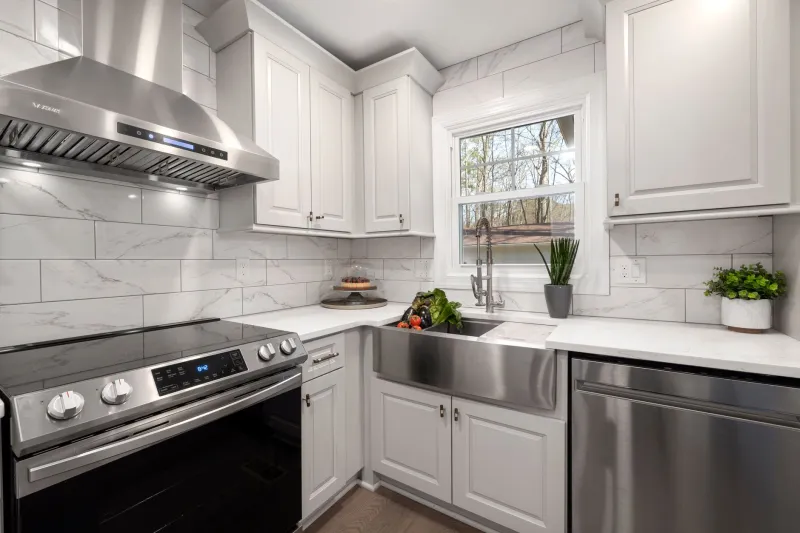
Your oven does not operate in isolation. It functions as part of a larger kitchen ecosystem that includes your range hood or exhaust fan, the room's airflow, and in many homes, a connection to exterior ductwork. When any part of that system is compromised, your oven's performance reflects it.
A range hood clogged with grease buildup — a problem that develops gradually and often goes unnoticed — cannot effectively remove heat, moisture, or cooking fumes from the kitchen. The result is a cooking environment that retains heat and humidity, which in turn affects how consistently your oven maintains its set temperature. Over time, this feedback loop contributes to uneven cooking results that many homeowners mistakenly attribute to the oven itself.
In homes where the range hood vents internally rather than to the exterior, the filter system requires even more frequent attention. A saturated charcoal or mesh filter recirculates rather than removes contaminants, and the degraded air quality in the kitchen becomes a compounding factor in overall appliance performance.
The takeaway is straightforward: if your oven is underperforming, your ventilation system deserves equal scrutiny.
Uneven Heating and the Insulation Factor
One of the more telling performance issues homeowners encounter is inconsistent cooking — one side of a baking sheet browns while the other remains pale, or a roast cooks faster on top than on the bottom despite proper rack placement. While a dirty oven can certainly contribute to this problem through compromised heat circulation, uneven heating also points to potential insulation degradation.
Oven insulation, typically composed of fiberglass or mineral wool packed between the inner and outer walls, degrades over years of use. When insulation loses its effectiveness, the oven struggles to maintain a stable internal temperature, cycling on and off more frequently and creating hot and cold zones within the cavity. This inefficiency is not only frustrating from a culinary standpoint — it also increases energy consumption and places additional stress on heating elements and thermostats.
A professional assessment can distinguish between performance issues caused by accumulated residue and those rooted in structural degradation. This distinction matters enormously because the corrective path for each is entirely different.
Extended Preheat Times: A Quiet Warning
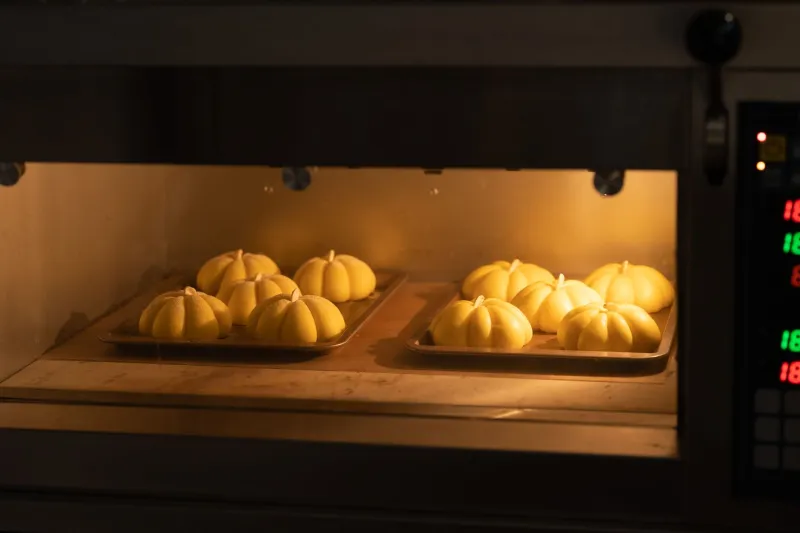
If your oven now takes noticeably longer to reach its target temperature than it did a few years ago, that change is worth taking seriously. Extended preheat times are frequently associated with one or more of the following conditions: a weakening heating element, a thermostat that is reading temperatures inaccurately, or a heavily soiled oven interior that absorbs and dissipates heat before the cavity can stabilize.
The third cause is the most commonly overlooked. A thick layer of carbonized grease on the oven walls and floor acts as an insulating barrier — but not the beneficial kind. Rather than retaining heat within the cooking space, this residue absorbs radiant energy and converts it into additional smoke and odor rather than productive heat. The practical consequence is an oven that works harder, costs more to operate, and delivers less consistent results.
Removing that residue through professional deep cleaning frequently restores preheat performance to near-original levels, eliminating what appeared to be a mechanical problem without replacing a single component.
Persistent Odors as a Health and Structural Signal
An oven that continues to emit unpleasant odors even when empty and at operating temperature is communicating something worth heeding. In some cases, the source is residue that has migrated into areas difficult to access through standard cleaning — beneath the oven floor plate, around the door hinges, or within the broiler drawer. In other cases, odors may originate from degraded door gaskets, which can off-gas as they age and break down under repeated heat exposure.
Persistent chemical or burning odors in a gas oven warrant immediate professional attention, as they may indicate combustion irregularities that go beyond routine maintenance.
The Professional Cleaning Advantage as a Starting Point
Positioning a professional oven cleaning as a diagnostic first step — rather than simply a cleaning service — reflects how Oven Refresh approaches kitchen appliance care. When a trained technician examines your oven, they are not only removing grease and carbon deposits. They are evaluating door seal integrity, assessing element condition, identifying signs of insulation wear, and noting anything that suggests the appliance or its surrounding systems require further attention.
This comprehensive perspective transforms what might seem like a routine service call into a meaningful kitchen health assessment. Issues caught at this stage are almost universally less expensive to address than those discovered after a component fails or a ventilation problem leads to moisture damage in surrounding cabinetry.
Reading the Room — and the Appliance
Your kitchen is a system, and your oven is its most thermally intensive component. When that component begins to show signs of strain — through smoke, inconsistent temperatures, extended preheat cycles, or lingering odors — the appropriate response is not to dismiss those signs as ordinary wear. It is to treat them as the diagnostic information they are.
The homeowners who maintain the most efficient, longest-lasting kitchens are those who have learned to listen when their appliances speak. A well-maintained oven does not just cook better. It tells you, reliably and consistently, that everything around it is functioning as it should.